
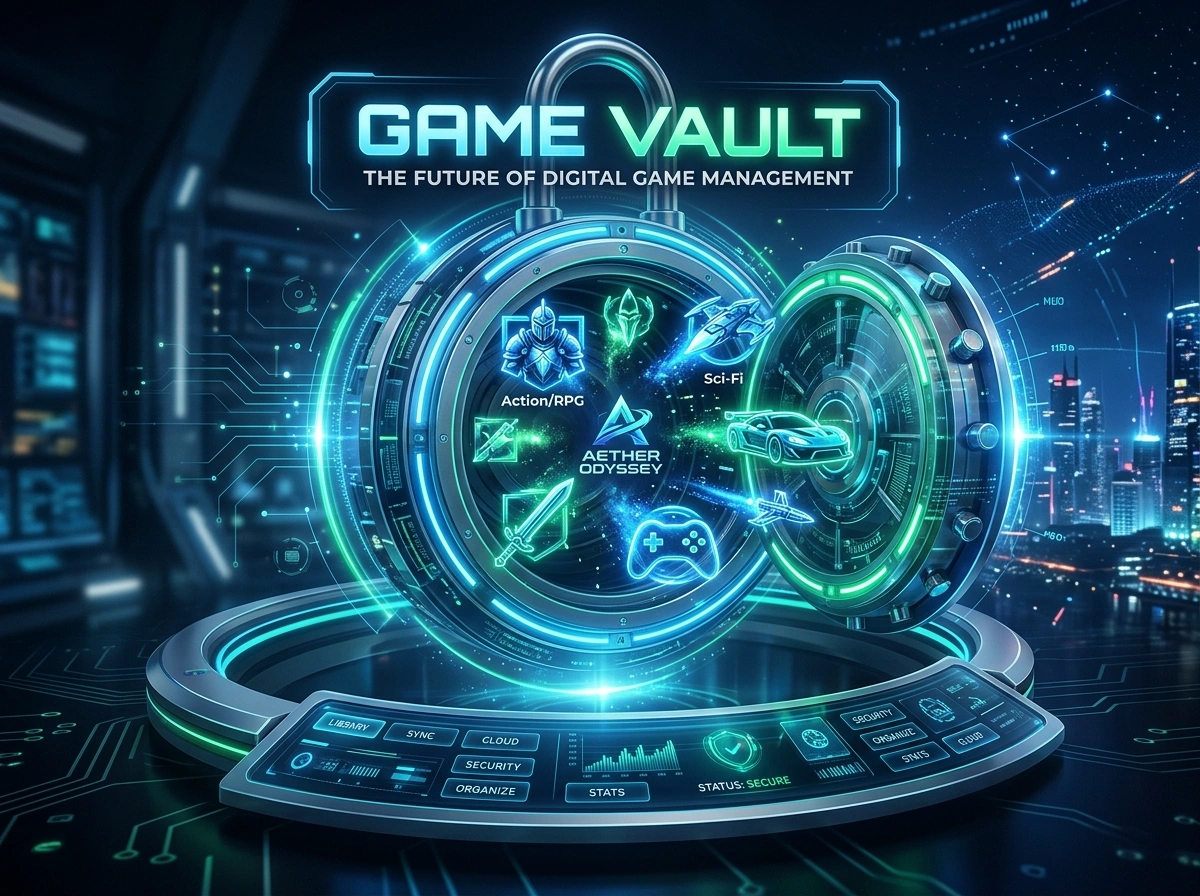
Game vault: The Future of Digital Game Management
The era of physical game discs lining our living room shelves is largely behind us. Digital distribution has completely transformed how we buy, play, and store our video games. Yet, this convenience has introduced a complex new problem for the modern gamer: severe library fragmentation. As digital storefronts multiply and cross-platform play becomes the standard, keeping track of your digital assets feels more like administrative work than entertainment.
If you find yourself constantly jumping between different application launchers, struggling to locate purchased titles, or worrying about the security of your digital investments, you are experiencing the friction of modern gaming.
This article explores the evolution of digital game libraries and the growing challenges of managing vast collections across multiple platforms. We will also examine how modern aggregation solutions are streamlining the user experience, providing better security, and shaping the future of digital game management.
The Evolution of Digital Game Libraries
To understand the current landscape, we must look at how digital game distribution evolved. A decade ago, digital gaming was relatively straightforward. PC gamers primarily used a single dominant storefront, while console players relied on the proprietary networks built into their hardware. The user experience was contained, linear, and easy to manage.
As the industry grew into a multi-billion-dollar juggernaut, publishers recognized the financial benefit of owning their distribution channels. This led to an explosion of proprietary launchers and storefronts. While this created healthy market competition and occasionally better revenue splits for developers, it fractured the consumer experience.
Gamers now routinely maintain accounts across a dozen different ecosystems. You might have your competitive shooters on one platform, your indie favorites on another, and your subscription-based game passes operating through an entirely different interface. The digital shelf has expanded to infinity, but the organization of that shelf has degraded into chaos.
The Core Challenge: Managing Vast Collections Across Platforms
The fragmentation of digital storefronts creates tangible pain points for consumers. When you own hundreds of games scattered across different digital ecosystems, simply finding what you want to play becomes a hurdle.
The Friction of Multiple Launchers
Every platform requires its own background application, login credentials, and update processes. Having multiple game launchers running simultaneously consumes valuable system resources, potentially degrading the performance of your hardware. Furthermore, remembering which platform holds the specific title you want to play often requires third-party tracking tools or manual spreadsheets.
Lost Progression and Isolated Data
Beyond simply locating games, players face the challenge of isolated save data and friend lists. If you play a multiplayer game on your console and later wish to play on your PC, you often face a disjointed experience. Your achievements, saved progress, and social networks are locked behind the walled gardens of individual platforms.
The Illusion of Ownership
Digital purchases often represent long-term licenses rather than true ownership. When titles are spread across various loosely connected accounts, the risk of losing access due to forgotten passwords, hacked accounts, or shuttered storefronts increases significantly. Gamers invest thousands of dollars into their digital collections, yet lack a unified way to oversee and protect these assets.
Enter the Unified Solution: Streamlining the User Experience
The industry is beginning to recognize that forcing players to navigate a labyrinth of launchers is unsustainable. The solution lies in powerful aggregation platforms that bridge the gap between competing ecosystems. Implementing a centralized Game vault approach allows players to consolidate their fragmented libraries into one cohesive, highly organized dashboard.
Intelligent Library Aggregation
Modern digital management tools function as a universal library. By connecting your various accounts via secure APIs, these platforms scan your purchases and present them in a single, unified interface. You no longer need to remember if you bought a specific role-playing game on a specific storefront; the management software handles the indexing.
One-Click Launching and Optimization
The most advanced library managers allow you to launch any game directly from their interface. The software automatically handles the background task of opening the required proprietary launcher, verifying the license, and booting the game. Once you exit the game, the manager can close the background applications, freeing up system memory and optimizing your hardware performance.
Cross-Platform Integration and Seamless Accessibility
The holy grail of digital game management is true cross-platform integration. As the boundaries between PC, console, and mobile gaming continue to blur, players demand an experience that transcends hardware limitations.
Unified Social Ecosystems
Managing a digital library is not just about organizing software; it is about organizing your social connections. Future-facing management tools are integrating chat features and friend lists from various platforms. This allows you to see what your friends are playing, regardless of the hardware or storefront they are currently using.
Cloud Gaming and Instant Access
The rise of cloud gaming is inherently tied to library management. As high-speed internet becomes ubiquitous, the necessity of downloading massive game files decreases. Unified management platforms are beginning to integrate cloud streaming options directly into their dashboards. If you own a game, you should be able to stream it to any device you choose, seamlessly picking up right where you left off.
Security, Privacy, and Asset Protection
With digital game libraries often valued in the thousands of dollars, security is no longer an afterthought—it is a critical requirement.
Centralized Authentication and 2FA
Managing a dozen different passwords for a dozen different gaming accounts is a severe security vulnerability. Advanced digital management systems encourage the use of centralized, robust authentication protocols. By routing your access through a highly secure primary dashboard, you can implement strict Two-Factor Authentication (2FA) and biometric logins to protect your entire collection from unauthorized access.
Data Encryption and Privacy Controls
As these platforms gather data regarding your playing habits, purchase history, and social interactions, data privacy becomes paramount. Authoritative management tools utilize end-to-end encryption to ensure your data is secure. Furthermore, they provide granular privacy controls, allowing you to decide exactly what information is shared with third-party developers and publishers.
The Future of the Industry: AI and Anticipatory Management
Looking ahead, the integration of Artificial Intelligence will take digital game management from a passive organizational tool to an active gaming companion.
Algorithmic Recommendations and Backlog Management
Most gamers possess a “backlog”—a list of purchased games they have never played. AI-driven management platforms will soon analyze your playstyle, completion rates, and historical preferences to intelligently recommend which game in your existing library you should tackle next. Instead of endlessly scrolling through your collection, the system will curate a personalized itinerary.
Automated Storage Allocation
Modern games frequently demand upwards of 100 gigabytes of storage space. Future management tools will feature automated drive management. If the system notices you have not played a massive multiplayer game in three months, it will automatically back up your local saves to the cloud and uninstall the bulk data, freeing up space for new titles. When you want to play again, it will initiate the download in the background.
Conclusion
The transition from physical media to digital libraries fundamentally altered the gaming landscape, bringing unprecedented convenience at the cost of organizational chaos. As digital storefronts continue to multiply and game file sizes expand, the need for intelligent, unified oversight has never been more apparent.
The future of digital game management lies in breaking down the walled gardens built by individual publishers. By embracing powerful aggregation dashboards, gamers can finally reclaim control over their libraries, ensuring their digital investments remain secure, organized, and instantly accessible.
To take control of your digital collection, start auditing your various accounts today. Implement strong security measures across your platforms and explore unified library managers that fit your specific hardware ecosystem. The era of digital fragmentation is ending, making way for a streamlined, player-first future.
previous post
