
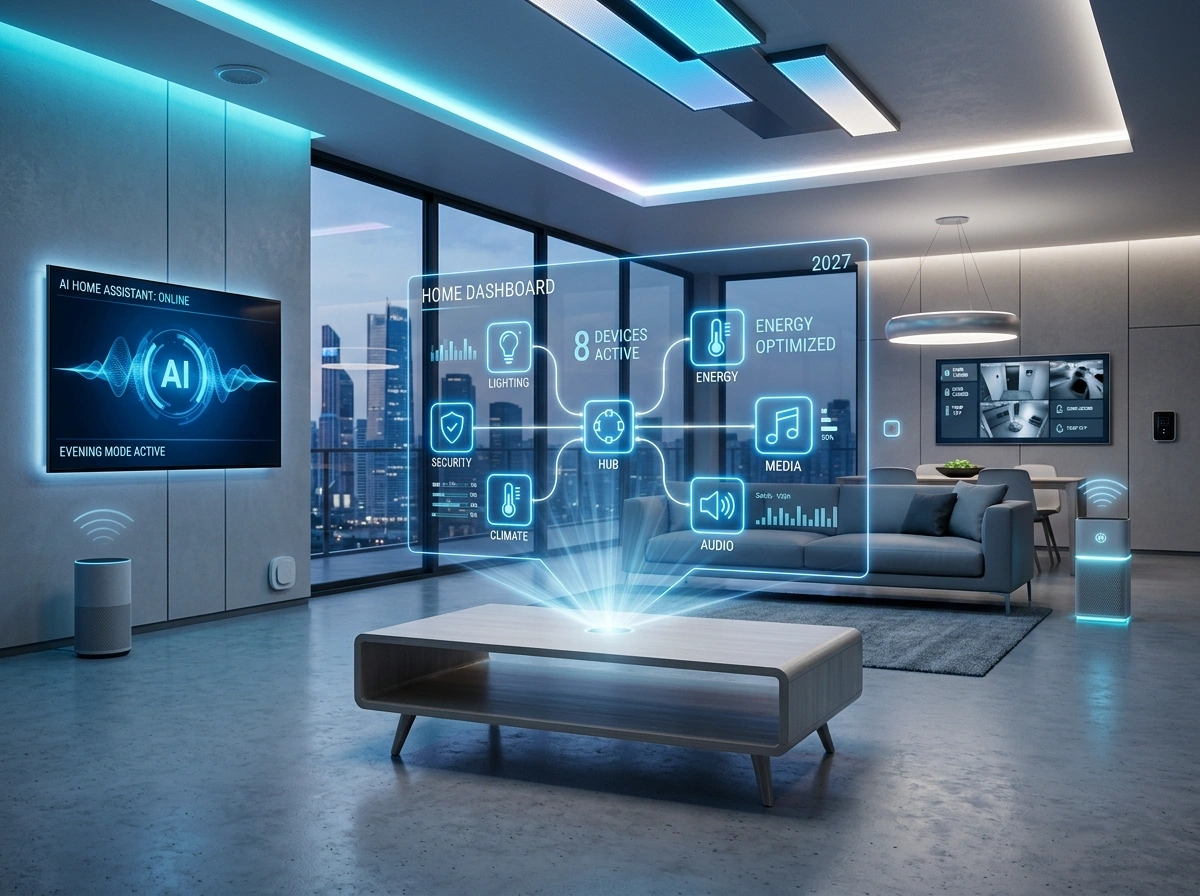
The Future of Smart Homes: Gadgets Tech Hence Predicts Will Rule 2027
Not long ago, a “smart home” meant little more than a voice speaker that could play your favorite playlist or set a kitchen timer. Fast forward to today, and American households run on connected thermostats, video doorbells, robot vacuums, and lighting you can control from anywhere. The shift has been fast, and it isn’t slowing down.
By 2027, the way we live inside our homes will look dramatically different. Devices won’t just respond to commands—they’ll anticipate needs, talk to each other, and quietly handle daily routines in the background. For homeowners across the country, from apartments in New York to sprawling houses in Texas, the next wave of gadgets promises real convenience, lower energy bills, and stronger peace of mind.
Let’s break down the smart home categories poised to lead the way.
AI Assistants Get a Serious Upgrade
The voice assistant you use today is helpful, but it’s mostly reactive. You ask, it answers. The next generation flips that model entirely.
By 2027, expect AI assistants powered by advanced language models to move from simple command-takers to genuine household managers. These systems will understand context, remember your preferences, and string together complex tasks without hand-holding. Ask your assistant to “get the house ready for guests,” and it might adjust the lighting, set the thermostat, queue a playlist, and remind you to start the coffee.
What makes this leap possible is on-device processing. Instead of sending every request to the cloud, newer chips handle much of the work locally. That means faster responses and better privacy—a growing concern for American families who want convenience without sacrificing their personal data.
Smart Security That Thinks Ahead
Home security has always been a top priority for U.S. homeowners, and the technology is evolving to match those expectations.
AI-Powered Cameras and Recognition
Modern security cameras already detect motion, but 2027 models will tell the difference between your dog, a delivery driver, and a genuine intruder. Fewer false alerts mean you only get notified when it actually matters. Facial recognition will let trusted family members and regular visitors pass without triggering alarms, while flagging unfamiliar faces instantly.
Integrated Whole-Home Systems
The days of piecing together separate cameras, sensors, and locks are ending. Expect fully integrated systems where every device shares information. If a door sensor trips while you’re away, cameras start recording, smart lights switch on, and your phone lights up with a live feed—all automatically. Analysts at tech hence point to this kind of seamless coordination as the defining feature of next-generation home security.
Energy Management Takes Center Stage
With energy costs fluctuating across states and a national push toward efficiency, smart energy tools are becoming essential rather than optional.
By 2027, smart thermostats will do far more than learn your schedule. They’ll factor in real-time electricity pricing, weather forecasts, and even your solar production to decide the cheapest, greenest time to heat or cool your home. Smart panels will route power intelligently, prioritizing critical circuits during outages and storing excess solar energy for later use.
Home battery systems, paired with rooftop solar, will let more households operate partly or fully off the grid. For regions prone to extreme weather—think hurricanes in Florida or wildfires in California—this resilience offers both savings and security. The average homeowner could see meaningful reductions on monthly utility bills, all while shrinking their carbon footprint.
Health Tech Moves Into the Home
One of the most exciting frontiers is the merging of healthcare and home technology. As the U.S. population ages and telehealth becomes mainstream, homes are turning into wellness hubs.
Passive Health Monitoring
The next wave of health gadgets works quietly in the background. Smart sensors embedded in beds can track sleep quality, heart rate, and breathing patterns without a single wearable. Bathroom mirrors and scales will offer daily wellness snapshots, spotting subtle changes over time.
Support for Aging in Place
Millions of older Americans want to stay in their own homes rather than move to care facilities. Smart home health tech makes that possible. Fall-detection systems, medication reminders, and motion sensors that alert family members to unusual activity give both seniors and their loved ones peace of mind. By 2027, these tools will be more affordable and less intrusive, blending naturally into everyday living.
Home Automation That Just Works
Automation is where all these gadgets come together. The real magic of a smart home isn’t any single device—it’s how they cooperate.
A major breakthrough driving this is the Matter standard, the universal language that lets products from different brands finally communicate. For years, buying smart home gear meant checking whether it worked with your existing ecosystem. That friction is disappearing. By 2027, you’ll be able to mix and match devices with confidence, knowing they’ll play nicely together.
Picture a typical morning: your alarm goes off, the blinds rise gradually, the coffee maker starts, the thermostat warms the house, and your assistant reads out the day’s schedule and traffic. You didn’t press a single button. This is the invisible, ambient intelligence that defines the modern smart home—technology that fades into the background and simply handles life for you.
Robots and Smart Appliances Grow Up
Household robots are stepping beyond the vacuum. Expect multi-purpose home robots capable of mopping, tidying, monitoring the house, and even carrying items between rooms. While a fully humanoid helper may still be a few years out, the building blocks are arriving quickly.
Meanwhile, kitchen appliances are getting smarter. Refrigerators will track what’s inside, suggest recipes, and add items to your grocery list automatically. Ovens will recognize the dish you place inside and cook it perfectly. These conveniences save time and cut down on food waste—a win for busy families and budget-conscious shoppers alike.
What This Means for American Homeowners
The smart home boom isn’t just about cool gadgets. It reflects deeper shifts in how we value time, safety, sustainability, and comfort. Across diverse regions and lifestyles, the appeal is universal: technology that adapts to you, rather than the other way around.
A few practical trends worth watching as you plan upgrades:
- Privacy first: More devices will process data on-device, giving you control over your information.
- Interoperability: Thanks to shared standards, brand lock-in is fading fast.
- Affordability: As adoption rises, prices drop, putting advanced features within reach of more households.
- Energy savings: Smart systems increasingly pay for themselves through lower utility bills.
For anyone considering an upgrade, the smart move is to build gradually around an open, compatible ecosystem. Start with the category that solves your biggest pain point—whether that’s security, energy costs, or daily convenience—and expand from there.
The Bottom Line
The smart home of 2027 won’t feel like a collection of gadgets. It will feel like a responsive partner—one that keeps you safe, manages your energy, supports your health, and handles the small stuff so you can focus on what matters.
AI assistants will grow genuinely capable. Security will become proactive. Energy tools will save real money. Health tech will bring peace of mind. And thanks to universal standards, all of it will finally work together without a headache.
The future of the connected home is closer than you think, and it’s shaping up to be smarter, simpler, and more human than ever. For homeowners ready to embrace it, the next few years promise a home that doesn’t just shelter you—it works for you.
